


Introduction
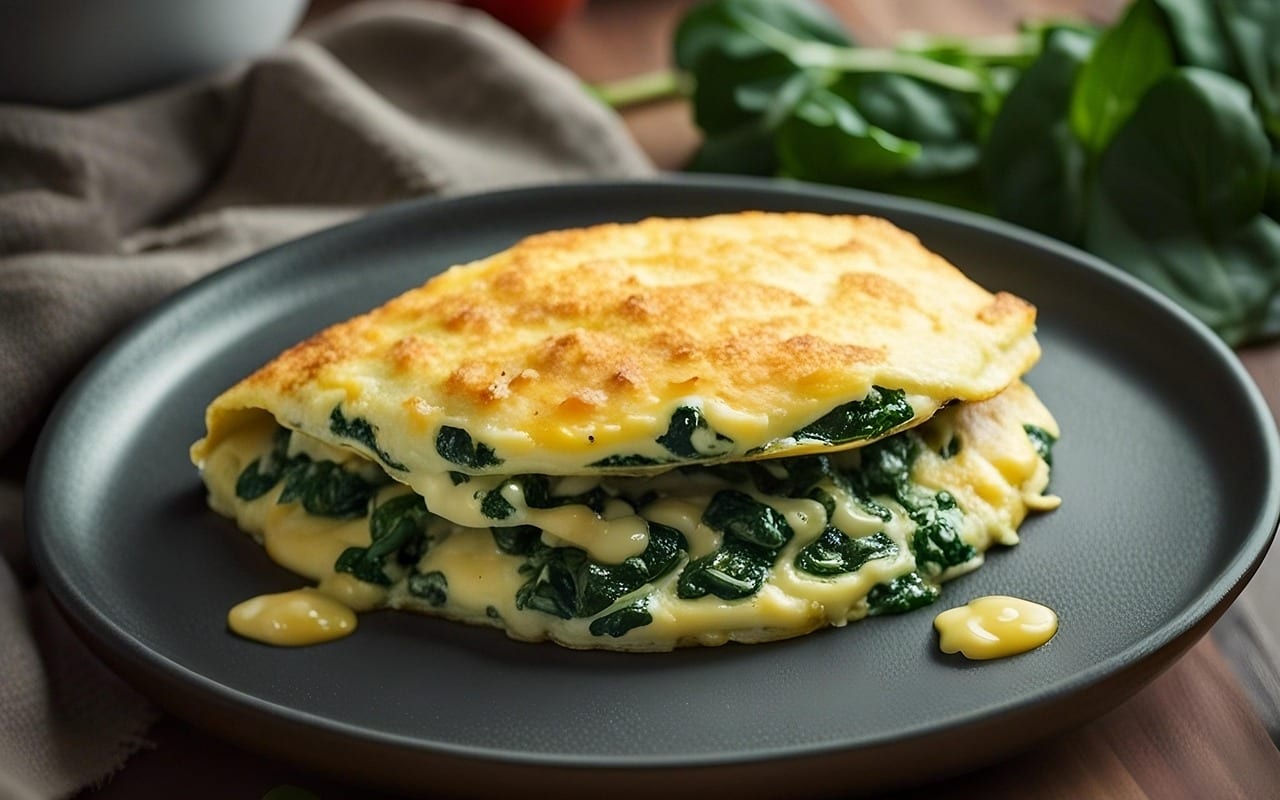
A French omelette is pale yellow outside, without any brown, and soft and creamy inside, rolled into a neat oval. It takes three eggs and two minutes. It is the dish to master for a quick lunch or dinner, and it shows how much technique counts with very simple ingredients.
Omelettes are an old French dish: the word itself appears in French by the 16th century. The rolled, barely set style is the standard taught in French cooking schools. The secret is a good non-stick pan, enough butter, a medium heat and constant movement. Your first ones may tear or brown: they still taste good, and the next ones get better.
Ingredients
- 3 eggs
- 15 g butter
- salt
- 1 tablespoon chopped chives (optional), or a little grated cheese
Tools
- A non-stick frying pan, about 20 cm wide
- A small bowl and a fork
- A flexible spatula
Preparation
- Beat the eggs with a pinch of salt with the fork until fully mixed, with no streaks of white.
- Heat the pan over a medium heat and add the butter. When it foams but before it browns, pour in the eggs.
- At once, stir the eggs quickly with the spatula while shaking the pan back and forth, as for very soft scrambled eggs. Keep going for 30 to 60 seconds, until the eggs are almost set but still wet on top.
- Stop stirring and smooth the surface. Leave for 10 seconds to set the bottom. Add the chives.
- Tilt the pan away from you and, with the spatula, roll the near third of the omelette towards the middle.
- Bring the plate to the far edge of the pan and tip the omelette onto it, folding it over itself so the seam is underneath. Rub the top with a little butter and eat at once.